Chrome is a mirror

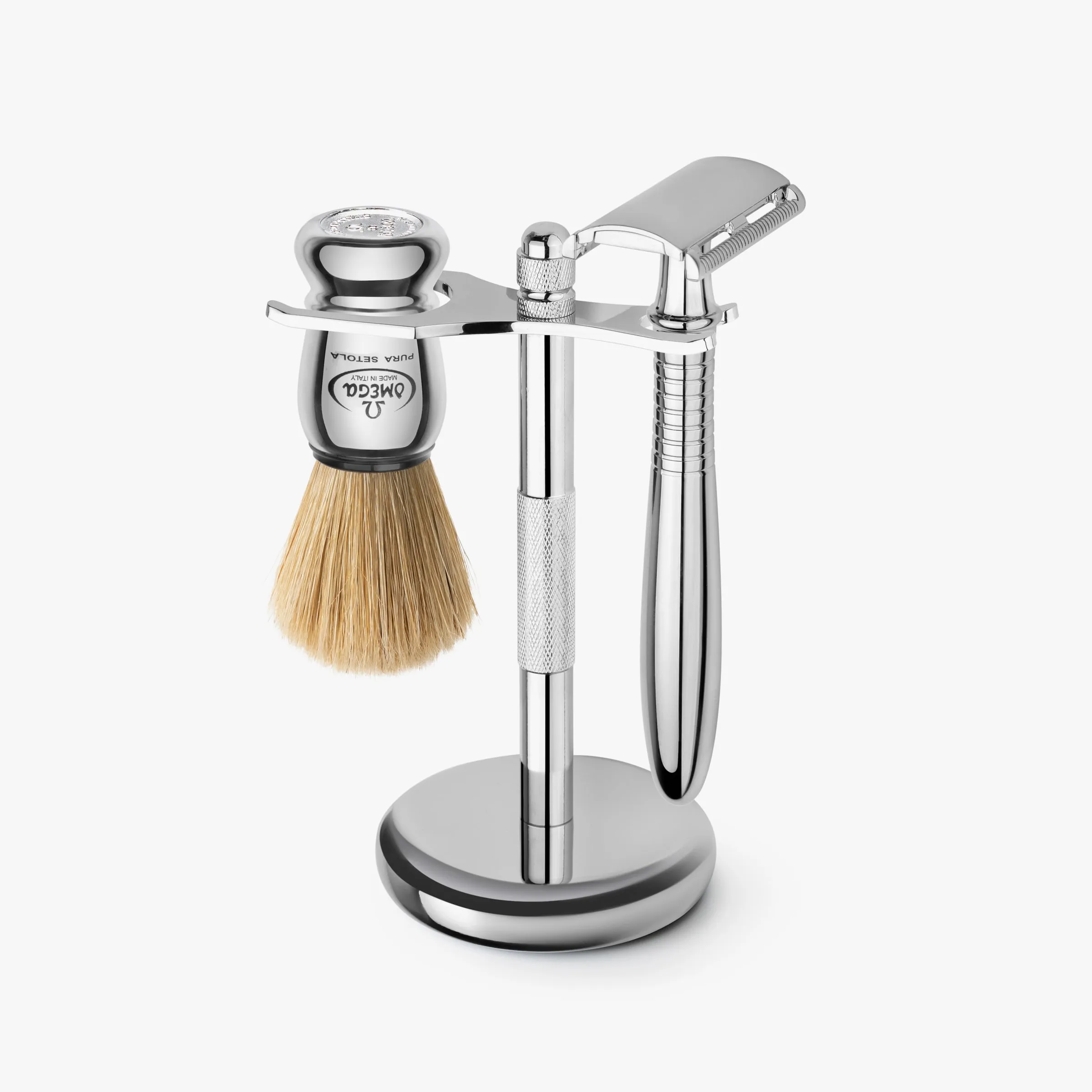
Chrome has no colour of its own. Everything you see on it is a reflection of what surrounds it: softboxes, studio walls, stands, the photographer. So metal has to be shot not as an object but as a mirror, and the real question is not “how do I light it” but “what should it reflect”.
Narrow light instead of big light
A wide softbox leaves a flat grey patch on chrome — the metal starts to look like plastic. A narrow strip above and slightly behind draws one long highlight along the whole form, and the eye reads both volume and material at once.
Black is light too
The most useful tool here is black flags on the sides. Without them chrome reflects the white studio and goes flat; with them dark bands run along the edges and the shape reads at first glance. Darkness in a reflection works like light — just with a minus sign.

One camera height for the whole series
If the shots sit next to each other in a catalogue, shoot them from one height with one lighting setup. The highlights on neighbouring products then line up, and the set looks like a series rather than a collection.